Sandy Beach: A Whimsical Coastal Font for Your Creative Projects
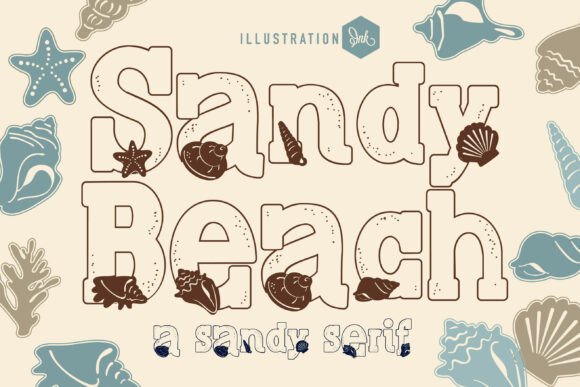
Imagine the crisp, sun-drenched air of the coastline and the gentle sound of waves lapping against the shore. Sandy Beach is a spectacularly whimsical novelty typeface that captures this essence, making it a perfect choice for a variety of creative projects. This thick, outline display font features heavy geometric slab-serif letterforms, uniquely textured with thousands of microscopic stippled sand grains. Adorned with intricate, hand-drawn seashells, starfish, and coiled conches, Sandy Beach adds a touch of coastal charm to any design.
Why Choose Sandy Beach?
Sandy Beach is not just another font; it's a statement. Its unique texture and decorative elements make it stand out, ideal for independent coastal resort identity systems, boutique organic skincare wrappers, sustainable seafood market signs, custom summer beach wedding invitations, and high-impact, sun-soaked-and-wholesome social media headlines. The font's versatility and charm can elevate your designs, making them more memorable and engaging.
Mistake 1: Overusing the Font
One of the most common mistakes is overusing Sandy Beach. While its decorative elements are eye-catching, using it too frequently in a single design can overwhelm the viewer. It's best to use this font sparingly, perhaps for key headings or logos, while pairing it with a simpler, more readable font for body text.
Mistake 2: Ignoring Context and Audience
Another mistake is using Sandy Beach without considering the context and audience. This font has a strong coastal and whimsical feel, which may not be suitable for all projects. For instance, using it for a corporate report or a serious document might send the wrong message. Always consider the tone and purpose of your project before choosing a font.
Mistake 3: Neglecting Legibility
While Sandy Beach is visually appealing, its decorative elements can sometimes affect legibility, especially at smaller sizes. Before using this font, ensure that the text remains readable. Test it at different sizes and on various backgrounds to see if it works well for your specific needs.
Use Sandy Beach Sparingly
To avoid overusing Sandy Beach, think of it as a highlighter. Use it to draw attention to key elements, such as titles, logos, or important sections. Pair it with a clean, simple font for the rest of the text to maintain balance and readability.
Consider the Context and Audience
Before using Sandy Beach, take a moment to reflect on the project's context and target audience. If the project is related to the beach, summer, or anything coastal, this font can be a great fit. However, for more formal or serious projects, consider a more traditional or professional font.
Test for Legibility
Always test Sandy Beach for legibility. Print out your design or view it on different devices to ensure that the text is clear and easy to read. If you find that the font is not legible enough, consider using it for larger, more prominent text or switch to a more readable font for smaller details.
What to Check Before Using Sandy Beach
- Licensing: Ensure that you have the appropriate license to use Sandy Beach for your intended purpose, whether it's for personal, commercial, or web use.
- Compatibility: Check that the font is compatible with the software and platforms you plan to use. Some fonts may not work well with certain applications or operating systems.
- File Format: Make sure you have the correct file format (e.g., .ttf, .otf) for your needs. Different formats may offer different features and compatibility.
Conclusion
Sandy Beach is a delightful and versatile font that can add a touch of coastal charm to your designs. By avoiding common mistakes and following practical advice, you can use this font effectively and create stunning, memorable projects. Whether you're designing for a beach resort, a summer wedding, or a fun social media post, Sandy Beach can help you achieve the perfect coastal vibe.